Jenny Uglow's A Gambling Man: Charles II's Restoration Game (Farrar, Straus and Giroux, 2009) is a fast-paced, expertly-crafted biography of Charles II during the first ten years of his reign (1660-1670), with brief telescopic looks at the periods before and after that decade. With the same writerly touch she brought to the life of Thomas Bewick in her last major biography, Uglow delves deeply into the gambles of the king during the early years of the Restoration.
Capturing the scale of the difficulties Charles faced when he returned to England in 1670 to mount the throne is a task and a half, but Uglow does so with ease, deftly explaining the delicate balance beam the new king was forced to walk as he sought to bring stability back to his kingdom. Religion, finance, military power, government power structure and responsibilities: all these and more had to be negotiated, discussed, ironed out. And then there were the advisors, and the women, and the relatives, all to be dealt with.
But this is much more than a biography of Charles II's first decade on the throne. As in her other works, Uglow pulls in the atmosphere of the time - significant space is devoted here to the founding and early years of the Royal Society, the Great Fire and rebuilding of London, the theater scene, the plague, &c. And the politics, oh the politics! An in-depth but well-explained primer on the machinations of Charles' court, too.
A fine read. Highly recommended.
Wednesday, January 27, 2010
Sunday, January 24, 2010
Links & Reviews
- A colonial silver bowl set a new auction record for American silver, selling for $5.9 million at Sotheby's New York on Friday (smashing the previous record by an order of magnitude). The bowl was made in New York c. 1700/1710, and passed down through the Loring family. Your starting point for further reading on this should John Bell's two blog posts: "The Mystery of the Loring Bowl" and "Silver Bowl, Belonged to Joshua Loring." On the latter, please note the comments, and also see this post at Real Clear Arts.
- The BPL's special collections holdings are profiled in today's Boston Herald.
- Cool summer course at the Lilly, on rare-book references sources.
- The finalists for the National Book Critics Circle awards were announced yesterday. Carolyn Kellogg has a good rundown. The awards will be announced in March.
- Also in the New Yorker, a short story, "Trailhead," by E.O. Wilson. A fictionalized account of ants, which I found utterly beautiful. It's from Wilson's novel Anthill, coming out this spring from W.W. Norton. Deborah Treisman talks with Wilson about the book in a Book Bench blog post.
- The BPL's Poe exhibit and its curator Paul Lewis get some love in the Boston Globe today. It's a good show, so do stop by if you get the chance!
- In the Financial Times, Simon Schama muses about what a "24th-century digital archaeologist" will think about the objects of our time.
- Arson at a synagogue in Crete destroyed more than 2,500 rare books, the director said.
- Nick Basbanes highlights New York's Bibliography Week, coming up in late January.
Reviews
- Heilemann and Halperin's Game Change: reviews by Hendrik Hertzberg in the New Yorker; by Sarah Baxter in the Sunday Times.
- Nick Basbanes highlights New York's Bibliography Week, coming up in late January.
Reviews
- Heilemann and Halperin's Game Change: reviews by Hendrik Hertzberg in the New Yorker; by Sarah Baxter in the Sunday Times.
- Alison Weir's The Lady in the Tower: review by Hilary Mantel in the NYTimes.
- John Yoo's Crisis and Command and Garry Wills' Bomb Power: review by Walter Isaacson in the NYTimes.
- Seeing Further, a new collection of essays about the first 350 years of the Royal Society (edited by Bill Bryson): reviews by Leo Hollis in the Telegraph; by James McConnachie in the Sunday Times.
- A.S. Byatt's The Children's Book: review by Anita Sethi in the Independent.
- Robert Winder's The Final Act of Mr. Shakespeare: review by David Grylls in the Sunday Times.
- Peter Carey's Parrot and Olivier in America: review by Peter Kemp in the Sunday Times.

Saturday, January 23, 2010
LEA Updates
Some more recent updates/additions/&c. to the Libraries of Early America:
- I've added a collection of books shipped over to New England with an early group of Massachusetts Bay Colony settlers in April, 1629. We don't know what became of these books (most of which were chosen by Rev. Samuel Skelton), but it's an interesting little grouping.
- The Internet Archive scanners at BPL have been going hog-wild with John Adams books lately - I've added links to the digital versions of more than fifty volumes in the last couple days alone. For any record that has a "Digital Version" link (like this one), you can click through and read John Adams' copy of the book.
- I'm continuing to add medical books to the library of Dr. John Jeffries - a bit of a slog (I'm through 12 pages of the 40-page catalog) but it's progressing.
Jacques to Stand Trial
Book thief William Simon Jacques appeared in court yesterday for a committal hearing; he did not apply for bail (presumably after his two-year bail-jump last time around that would have been instantly denied). Local media reports note that Jacques will next be in court on 25 February, when he will enter a plea in the case.
Jacques stands accused of stealing Ambroise Verschaffelt's Nouvelle Iconographie des Camellias (1849-1860), a set totaling 13 volumes and worth £40,000-50,000, from the library of the Royal Horticultural Society.
This Week's Acquisitions
Here's what arrived this week:
- Thomas Chatterton's Art: Experiments in Imagined History by Donald S. Taylor (Princeton University Press, 1978). Oak Knoll.
- My Life with the Lincolns by Gayle Brandeis (Henry Holt, 2010). Publisher (ALA Midwinter).
- Heresy by S.J. Parris (Doubleday, 2010). Publisher (ALA Midwinter).
- The Bird by Colin Tudge (Crown, 2008). Publisher (ALA Midwinter).
- Parrot and Olivier in America by Peter Carey (Knopf, 2010). Publisher (ALA Midwinter).
- The Oxford Companion to the Book; edited by Michael J. Suarez and H.R. Woudhuysen (OUP, 2010). Publisher (ALA Midwinter).
Thursday, January 21, 2010
The Mather Library (Now With Collections!)
I've added collections to the LibraryThing catalog of the Mather Family Library, so it's possible to more easily see the breakdown of where the books are now (those that we know of, anyway). Not surprisingly the AAS leads the way with 1,482 known titles; the MHS follows well behind with 94, and then there are a smattering of others (Harvard with 60, Yale with 27, the Huntington with 13, &c. &c.).
I also added collections for the books Cotton Mather purchased as duplicates from the Harvard College library in 1682 (some of which are now back there), and for those books we know came out of the Thomas Shepard libraries.
Of course these numbers will change as we're able to confirm more locations, which I hope to be able to do. There are 95 titles I have as "Present Location Unknown," so if you can help me decrease that number, I'll be eternally grateful (I'm sure some of these are now in institutional collections).
I also added collections for the books Cotton Mather purchased as duplicates from the Harvard College library in 1682 (some of which are now back there), and for those books we know came out of the Thomas Shepard libraries.
Of course these numbers will change as we're able to confirm more locations, which I hope to be able to do. There are 95 titles I have as "Present Location Unknown," so if you can help me decrease that number, I'll be eternally grateful (I'm sure some of these are now in institutional collections).
Wednesday, January 20, 2010
Thomas Shepard Libraries (Part 2)
The second installment of the Thomas Shepard biblio-sleuthing saga is up at The Beehive. Here, a look at the MHS books from the Thomas Shepard libraries, with some additional notes on holdings in other institutions.
Tuesday, January 19, 2010
No Poe Toast This Year
The AP is reporting that the Poe Toaster did not leave the traditional cognac and rose offering at the gravesite of Edgar Allan Poe last night, for the first time since 1949. Jeff Jerome, curator at the Poe House, admits he doesn't know what's up.
Thomas Shepard Libraries (Part 1)
I've posted the first installment of what will be a several-part series at the MHS blog on the Thomas Shepard libraries. Check it out!
Monday, January 18, 2010
ALA Midwinter in Boston
 The American Library Association's Midwinter meeting was in Boston this year, held at various hotels around the city but mainly at the new Boston Convention & Exhibition Center (which, by the way, is a little tricky to get to but a beautiful space).
 We checked out the exhibit floor at the opening on Friday night (pictured at left), which
was very impressive: vendors of all stripes (publishers, library movers, suppliers of everything from OPAC software to furniture to databases to, oddly, pashmina scarves). Collected lots of literature on the areas I was tasked to get information on (microfilm scanners, art shelving), and picked up a few interesting-looking galleys from the various publishers (and drooled over the copy of the new Oxford Companion to the Book at the OUP booth).

I think my happiest moment of the night was when we got to the LibraryThing booth, where
Tim & Co. were showing off all the various LibraryThing for Libraries goodies (including
some awesome new features). The booth was just about completely mobbed every time we walked by, which was fantastic to see. I hope they picked up lots of new LTFL clients and general users too!
On Saturday night we joined a bunch of folks for the LT Meetup at the Green Dragon in Boston - that was great fun, a good chance to meet the LT crew and talk with some folks in person that I've known through LT for a long time. And we got to meet some new folks, many of whom had come from quite a distance to visit Boston for ALA.
Since the weekend involved other projects as well I didn't get to quite as much of the "conference-type" stuff as I'd hoped, but will post on that part of things later on.
This morning, the last day of the exhibits, I T'ed out to the hall again (complete was a nice slog through some really unpleasant weather), since the publishers were said to be doing deals on their display copies. I beelined to the OUP booth as soon as the doors opened, and snapped up the Companion to the Book volumes at half price. Can't beat that! Then I wandered the hall one more time, chatted with some publishers, picked up another few galleys, and called it a day. Still good crowds out today, even with the weather, which was gratifying.
Sunday, January 17, 2010
Links & Reviews
Some really good book history posts in here, so read closely:
- Princeton's Stephen Ferguson adds to his earlier post on pre-1700 American books by reporting on some new discoveries of Thomas Shepard titles in the Princeton collection (including a set of Luther). We've also found that there were at least a couple Luther books in the Mather Library too - Cotton purchased two Luther titles (1, 2) as duplicates from the Harvard College Library in 1682. And stay tuned for a post from me on the MHS blog about other Shepard titles!
- At Mercurius Politicus, Nick has a very cool post on Pepys changing a title page in 1663 to reflect the return of Charles II. Lots of pictures and diary excerpts!
- The Ricci Map is now on display at the Library of Congress. This map, from 1602, has China at the center, and is known as the first map in Chinese to show the Americas.
- The Public Doman Blog has a very interesting post up, "Farenheit 451 ... Book Burning as done by lawyers." They provide a link to some of the major works that would have entered the public domain this year if copyright laws hadn't been extended.
- Princeton's Stephen Ferguson adds to his earlier post on pre-1700 American books by reporting on some new discoveries of Thomas Shepard titles in the Princeton collection (including a set of Luther). We've also found that there were at least a couple Luther books in the Mather Library too - Cotton purchased two Luther titles (1, 2) as duplicates from the Harvard College Library in 1682. And stay tuned for a post from me on the MHS blog about other Shepard titles!
- At Mercurius Politicus, Nick has a very cool post on Pepys changing a title page in 1663 to reflect the return of Charles II. Lots of pictures and diary excerpts!
- The Ricci Map is now on display at the Library of Congress. This map, from 1602, has China at the center, and is known as the first map in Chinese to show the Americas.
- The Public Doman Blog has a very interesting post up, "Farenheit 451 ... Book Burning as done by lawyers." They provide a link to some of the major works that would have entered the public domain this year if copyright laws hadn't been extended.
- An update on the legal kerfuffle over Kafka's papers.
- Another exchange on Robert Darnton's "Google and the New Digital Future" (commented on here), this one with the leadership of the Authors Guild. It's interesting that the authors call the current marketplace for out-of-print books "nil" - I think all the used booksellers out there would find this a little surprising ...
- Publishing Perspectives tackles the question of why so few books by foreign authors are ever published in the U.S. (it's not what you think).
- Publishing Perspectives tackles the question of why so few books by foreign authors are ever published in the U.S. (it's not what you think).
- The University of Pennsylvania has acquired the papers of Chaim Potok; the author left the materials to his alma mater in his will.
- From Early Modern at the Beinecke, a nice post on the font possibly used in the First Folio.
- The new NYPL website has debuted. And they've got a nice online exhibit to mark the 250th anniversary of the publication of Candide.
- Paul Collins looks back at Victorian fears of a French invasion via a Channel Tunnel.
- From BibliOdyssey, images from a c. 1420 Italian technology manuscript.
- From Early Modern at the Beinecke, a nice post on the font possibly used in the First Folio.
- The new NYPL website has debuted. And they've got a nice online exhibit to mark the 250th anniversary of the publication of Candide.
- Paul Collins looks back at Victorian fears of a French invasion via a Channel Tunnel.
- From BibliOdyssey, images from a c. 1420 Italian technology manuscript.
- A very surprising and neat find during the Jamestown excavations recently.
- Tarquin Tar's Bookcase takes a look at the Fortsas Hoax (including a link back to my 2008 Fortsas Lives! post from when I debuted the Fortsas LT library).
- Not books, but art: Polish police have recovered the nation's only Monet painting, stolen in September 2000 from a Poznan museum. A suspected, identified only as "Robert Z.", has been arrested.
Reviews
- The Children's Book by A.S. Byatt: review by Vanessa Thorpe in The Guardian.
- The Swan Thieves by Elizabeth Kostova: review by Clea Simon in the Boston Globe; Simmy Richman in The Independent; John O'Connell in the Times.
- Tarquin Tar's Bookcase takes a look at the Fortsas Hoax (including a link back to my 2008 Fortsas Lives! post from when I debuted the Fortsas LT library).
- Not books, but art: Polish police have recovered the nation's only Monet painting, stolen in September 2000 from a Poznan museum. A suspected, identified only as "Robert Z.", has been arrested.
Reviews
- The Children's Book by A.S. Byatt: review by Vanessa Thorpe in The Guardian.
- The Swan Thieves by Elizabeth Kostova: review by Clea Simon in the Boston Globe; Simmy Richman in The Independent; John O'Connell in the Times.
- Athanasius Kircher by Joscelyn Godwin: review by James Stevens Curl in the THE.
- The Marketplace of Ideas by Louis Menand: review by Michael S. Roth in the LATimes.
- The Infinity of Lists by Umberto Eco: review by Michael Dirda in the Washington Post.
- The Infinity of Lists by Umberto Eco: review by Michael Dirda in the Washington Post.
- Remarkable Creatures by Tracy Chevalier: review by Ron Charles in the Washington Post.
- A Brave Vessel by Hobson Woodward: review by Tom Dillon in the Winston-Salem Journal.
- The Devil in the Holy Water by Robert Darnton: review by Eve Ottenberg in In These Times.
- Game Change by John Heilemann and Mark Halperin: reviews by Jacob Heilbrunn in the NYTimes; Alan Wolfe in the Washington Post; Peter Stothard in the Times.
Saturday, January 16, 2010
Hang Onto Your Maps, Folks!
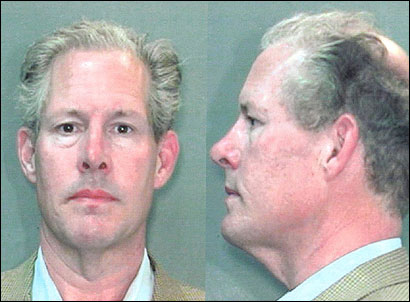
 Everett Wilkie confirms that convicted map thief E. Forbes Smiley was released yesterday, 15 January 2010.
Photo from Boston.com.
This Week's Acquisitions
Here's what arrived this week:
- Bird by Andrew Zuckerman (Chronicle Books, 2009). Gift.
- The List: The Uses and Pleasures of Cataloging by Robert E. Belknap (Yale University Press, 2004). Amazon (used).
- Deception and Detection in Eighteenth-Century Britain by Jack Lynch (Ashgate, 2008). Colophon Books.
- The Web of Empire: English Cosmopolitans in an Age of Expansion, 1560-1660 (OUP, 2008). Brattle.
- The Qur'an, translated by Abdullah Yusuf Ali (Tahrike Tarsile Qur'an, Inc., 2009). Publisher (ALA Midwinter).
- The Bad Book Affair: A Mobile Library Mystery by Ian Sansom (Harper, 2010). Publisher (ALA Midwinter).
- 31 Bond Street by Ellen Horan (Harper, 2010). Publisher (ALA Midwinter).
And a whole bunch got weeded, too.
Friday, January 15, 2010
New Common-place Launched
The January Common-place is out! It includes a piece co-written by my Monticello colleague Endrina Tay and myself, "Reconstructing a Lost Library: George Wythe's 'legacie' to President Thomas Jefferson." We're glad to see this out, and hope that you enjoy it! And be sure to read all the other excellent articles in this issue, too - as usual, it's a really good collection of topics and voices.
Wednesday, January 13, 2010
LT Meetup in Boston on Saturday
If you're in town for ALA Midwinter this weekend, be sure to stop by the LibraryThing Meetup at the Green Dragon on Saturday, 5:30-8. Come talk books, libraries, Legacy Libraries - and have some food, too!
Tuesday, January 12, 2010
Book Review: "Bird"
Bird, a collection of Andrew Zuckerman's striking photographs (Chronicle Books, 2009) is a pure delight. The 200 photographs (of 75 different species, including the very rare Spix's macaw) appear simple (just the bird, against a pure white background), but when examined closely reveal color, texture and life that very few photographs I've ever seen can do.
The introduction to the photos, by designer Massimo Vignelli, contrasts Zuckerman's approach with Audubon's, noting the painter's "meticulous consideration" of the birds' colors, the "expression in their eyes," and their natural habitat. Zuckerman, he writes, "approaches birds with a contemporary, minimalist attitude: no more narrative context, no more psychological interpretations, no more candid shots in the wilderness." Just light.
While some of the photographs feature entire birds, many highlight just a small portion of the subject: a beak, an eye, a foot, a feathered breast. The flight images are spectacular, as are the severe facial close-ups (the very tight shot of a marabou stork's head may be enough to put you off dessert tonight). Zuckerman captures the feathery texture of a snowy owl's wing, the reptilian scaliness of a red-legged seriema's clawed foot, the iridescent blue of an American crow.
The images are complemented nicely by an explanatory epilogue by Alex Vlack, which explains a little bit of Zuckerman's technique and about the methods used to 'acquire' the images (they were not shot in the wild, after all). This explains much of the book's bias - there are few passerines, and many birds of prey/large land birds. No matter: the photos are beautiful. Thankfully there's also a key at the end to tell you what they are. That helps.
One of the most beautiful coffee-table books I've seen in a long time.
Monday, January 11, 2010
Book Review: "The Book Stops Here"
The third of Ian Sansom's Mobile Library Mysteries is The Book Stops Here (Harper, 2008). Like the first two, the mystery itself is only a small (and not entirely meaty) part of the book, most of which is focused on Sansom's brand of semi-snarky humor and satire. He seems to be working on adding a little more depth to his characters here, particularly the narrator (that'd be Israel Armstrong, the portly, pathetic librarian) and his sidekick (the gruff van-driver Ted Carson).
As with the other volumes, a good light read, with some very funny moments. My favorite bits were the few moments where Armstrong actually discusses the normal day-to-day operations of the mobile library; I laughed out loud through those pages.
Digitization Discussions @ AHA
Dan Cohen's American Historical Association conference talk "Is Google Good for History?" is an absolute must-read (as are the comments that follow). It's the most even-handed examination of the complex issues I've read, and he touches on just about every single one of the major points that should concern users of Google Books. You should read the whole thing, but I really liked this particular paragraph:
"We should remember that the reason we are in a settlement now is that Google didn’t have enough chutzpah to take the higher, tougher road—a direct challenge in the courts, the court of public opinion, or the Congress to the intellectual property regime that governs many books and makes them difficult to bring online, even though their authors and publishers are long gone. While Google regularly uses its power to alter markets radically, it has been uncharacteristically meek in attacking head-on this intellectual property tower and its powerful corporate defenders. Had Google taken a stronger stance, historians would have likely been fully behind their efforts, since we too face the annoyances that unbalanced copyright law places on our pedagogical and scholarly use of textual, visual, audio, and video evidence."
Also, HNN has posted video of some of the panels, including Cohen's talk, Paul Duguid at the same event, and the "What Becomes of Print in the Digital Age?" panel, featuring James Cortada, Anthony Grafton, and Abby Rumsey.
"We should remember that the reason we are in a settlement now is that Google didn’t have enough chutzpah to take the higher, tougher road—a direct challenge in the courts, the court of public opinion, or the Congress to the intellectual property regime that governs many books and makes them difficult to bring online, even though their authors and publishers are long gone. While Google regularly uses its power to alter markets radically, it has been uncharacteristically meek in attacking head-on this intellectual property tower and its powerful corporate defenders. Had Google taken a stronger stance, historians would have likely been fully behind their efforts, since we too face the annoyances that unbalanced copyright law places on our pedagogical and scholarly use of textual, visual, audio, and video evidence."
Also, HNN has posted video of some of the panels, including Cohen's talk, Paul Duguid at the same event, and the "What Becomes of Print in the Digital Age?" panel, featuring James Cortada, Anthony Grafton, and Abby Rumsey.
Sunday, January 10, 2010
Links & Reviews
- In the Winter 2009/10 print issue of Rain Taxi there's an interview with Paul Collins. He credits authors Edmund Lester Pearson and Van Wyck Brooks with influencing his choice of material, noting that they are "both keenly interested in overlooked and contextual authors," and has many good things to say about McSweeney's and its editor, Dave Eggers. He also provides some interesting background on writing The Book of William (which, if you haven't read it, I still highly recommend), and lets us in on his next project.
- It now appears that Kirkus Reviews may stay afloat; news this week that a buyer may have been found.
- Elizabeth Kostova discussed her new novel The Swan Thieves this week on NPR.
- Book Patrol notes that today's 6.5 CA quake rattled some bookshops, including our friend Scott Brown's Eureka Books (with pics). Thankfully it doesn't look like the damage was too serious.
- Caleb Crain's in the NYT Magazine this weekend with their "On Language" column - it's about the recent Historical Thesaurus of the Oxford English Dictionary.
- Also in the NYTimes, Ben Yagoda writes on authors being contacted about their works.
- The National Lighthouse Heritage Trust (UK) is putting a collection of 200 historic travel books up for auction in Edinburgh. The books could bring in as much as 200,000 GBP. The auction will be on Wednesday at Lyon and Trumbull.
- From BibliOdyssey, "Botanical Beasties." Beautiful!
- The former treasurer of the Erwin Library and Institute in Boonville, NY has pleaded not guilty to charges that he embezzled more than $280,000 from the library.
- It now appears that Kirkus Reviews may stay afloat; news this week that a buyer may have been found.
- Elizabeth Kostova discussed her new novel The Swan Thieves this week on NPR.
- Book Patrol notes that today's 6.5 CA quake rattled some bookshops, including our friend Scott Brown's Eureka Books (with pics). Thankfully it doesn't look like the damage was too serious.
- Caleb Crain's in the NYT Magazine this weekend with their "On Language" column - it's about the recent Historical Thesaurus of the Oxford English Dictionary.
- Also in the NYTimes, Ben Yagoda writes on authors being contacted about their works.
- The National Lighthouse Heritage Trust (UK) is putting a collection of 200 historic travel books up for auction in Edinburgh. The books could bring in as much as 200,000 GBP. The auction will be on Wednesday at Lyon and Trumbull.
- From BibliOdyssey, "Botanical Beasties." Beautiful!
- The former treasurer of the Erwin Library and Institute in Boonville, NY has pleaded not guilty to charges that he embezzled more than $280,000 from the library.
- There's an extract from Bill Bryson's Seeing Further: The Story of Science & the Royal Society in The Times.
- Campaign for the American Reader asks "What is Jack Lynch reading?"
Reviews:
- The Oxford Companion to the Book, edited by Michael Suarez and HW Woudhuysen: review by Noel Malcolm in The Telegraph.
- The American Civil War by John Keegan: review by Gary Gallagher in the Washington Post.
- A Gambling Man by Jenny Uglow: review by Megan Marshall in the NYTimes.
- The Citizen's Constitution by Seth Lipsky and The Annotated U.S. Constitution and Declaration of Independence by Jack Rakove: review by Adam Liptak in the NYTimes.
- Campaign for the American Reader asks "What is Jack Lynch reading?"
Reviews:
- The Oxford Companion to the Book, edited by Michael Suarez and HW Woudhuysen: review by Noel Malcolm in The Telegraph.
- The American Civil War by John Keegan: review by Gary Gallagher in the Washington Post.
- A Gambling Man by Jenny Uglow: review by Megan Marshall in the NYTimes.
- The Citizen's Constitution by Seth Lipsky and The Annotated U.S. Constitution and Declaration of Independence by Jack Rakove: review by Adam Liptak in the NYTimes.
- The Genesis Enigma by Andrew Parker: review by Richard Fortey in the TLS. My favorite review so far this year.
Saturday, January 09, 2010
This Week's Acquisitions
- McSweeney's Issues 1-3; 33; edited by Dave Eggers (McSweeney's, 2006; 2009). Publisher (they were having a sale on the first three issues, and the newest one - in the form of a full-sized Sunday paper - came as part of my new subscription).
- The Book Stops Here: A Mobile Library Mystery by Ian Sansom (Harper, 2008). Amazon. The third book in the series.
- The Magicians by Lev Grossman (Viking, 2009).
- Housekeeping vs. the Dirt by Nick Hornby (McSweeney's, 2006). Publisher.
Thursday, January 07, 2010
Another Crockett Contretemps
It's been about a year since the last Davy Crockett dispute faded away, so we're due for another. And we've got it, in the form of a lawsuit over Crockett's marriage license (to Margaret Elder, who he didn't end up marrying). A Tampa Bay woman has it (she even took it on "Antiques Roadshow"), but the Tennessee county where it was filed wants it back. The St. Petersburg Times reports that Margaret V. Smith claims her uncle found the license "on the lawn" at the Jefferson (TN) County Courthouse, where it had been thrown away. County officials say no files from that period were discarded (let alone Crockett's), and judge Allen Wallace says there's "circumstantial evidence" that Smith's uncle stole the document (he worked for the courthouse in the 1930s-40s). In November, he ordered Smith to turn over the license.
Smith, 90, responded to the judge's order by saying "Well they are not going to get it," leading Jefferson County, TN to request a local order from a judge in Hillsborough County, FL. The Florida judge must decide whether to honor the TN order (she could be held in contempt and/or fined each day until she returns the license).
This one seems pretty clear-cut to me, as long as Jefferson County can show that records from that period were not culled. But we'll see what happens ...
Another case to keep an eye on!
[h/t Everett Wilkie, Ex Libris]
Smith, 90, responded to the judge's order by saying "Well they are not going to get it," leading Jefferson County, TN to request a local order from a judge in Hillsborough County, FL. The Florida judge must decide whether to honor the TN order (she could be held in contempt and/or fined each day until she returns the license).
This one seems pretty clear-cut to me, as long as Jefferson County can show that records from that period were not culled. But we'll see what happens ...
Another case to keep an eye on!
[h/t Everett Wilkie, Ex Libris]
Book Review: "The Alchemaster's Apprentice"
Walter Moers does for food and medicine in The Alchemaster's Apprentice (Overlook, 2009) what he did for books in The City of Dreaming Books (my review). Instead of Bookholm this time, we're introduced to another Zamonian city, Malaisea, where almost everyone is ill (thanks to the tyrannical municipal alchemist Succubius Ghoolion). Ghoolion has a maniacal plan to gain absolute power and immortality, and our narrator - a young and down-on-his-luck Crat named Echo (Crats are like cats, but with the power of speech (and universal language comprehension, which comes in handy) falls into his clutches and makes something of a Faustian bargain with the alchemaster (which he spends the rest of the book trying to get out of).
Moers pours detail after detail into the book, creating yet another rich world. But instead of carefully describing books, this time he delves into the culinary and medico-botanical realms, regaling his readers with descriptions of lavish (and lengthy) feasts (and their various components), complex gardens filled with wonderful and strange plants, and recipes for alchemical and medicinal treatments.
The limning of characters doesn't suffer, though, for all the detail in other things. The personalities and quirks of Echo and Ghoolion are well drawn, and several others (including the fyllable-slipping Theodore T. Theodore, lovelorn Uggly Izanuela, and a giant moss-growing Toad) are welcome additions to the Moers dramatis personae.
Imaginative, quirky, and bizarre, made all the more entertaining by Moers' excellent (and creepy) illustrations.
Moers pours detail after detail into the book, creating yet another rich world. But instead of carefully describing books, this time he delves into the culinary and medico-botanical realms, regaling his readers with descriptions of lavish (and lengthy) feasts (and their various components), complex gardens filled with wonderful and strange plants, and recipes for alchemical and medicinal treatments.
The limning of characters doesn't suffer, though, for all the detail in other things. The personalities and quirks of Echo and Ghoolion are well drawn, and several others (including the fyllable-slipping Theodore T. Theodore, lovelorn Uggly Izanuela, and a giant moss-growing Toad) are welcome additions to the Moers dramatis personae.
Imaginative, quirky, and bizarre, made all the more entertaining by Moers' excellent (and creepy) illustrations.
Wednesday, January 06, 2010
"Book Marks" Online Exhibit
It's not new, but it's new to me: the Hill Museum & Manuscript Library at Saint John's University has a really nice online exhibit up: "Book Marks: The Trail Readers Leave Behind." Very nice pictures and good content.
[h/t John Overholt]
[h/t John Overholt]
Tuesday, January 05, 2010
New Fine Books Notes
The January Fine Books Notes is out: it includes a piece by Stephen Maugan on the continuing fight over the literary estate of Jack Kerouac; Nick Basbanes on Carol Fitzgerald (author of The Rivers of America and now Series Americana); a good auction recap by Ian McKay; an interview with Jeffrey Cramer (editor of a new edition of Thoreau's Maine Woods); a column by yours truly on the 1971 theft and recovery of a volume of Union College's Birds of America; and some new features, including book reviews and a list of catalogs received.
Monday, January 04, 2010
Reading the Athenaeum
I've been asked to review a new history of the Boston Athenaeum (Katherine Wolff's The Culture Club) for a future issue of Libraries & the Cultural Record, so as part of my preparation for that project I've been reading (and will continue to read) some of the earlier histories of the institution (and, as time permits, hopefully some of the recent publications relating to their bicentennial). I won't be writing reviews of each of these as I go (as I usually do), but you can keep up with what I'm doing using my new LT "Boston Athenaeum" tag.
Sunday, January 03, 2010
Book Review: "The Gardner Heist"
If you've ever spent any time in Boston at all (and quite possibly even if you haven't) you are likely aware that it's the sight of the greatest unsolved art robbery in history: the pillaging of the Isabella Stewart Gardner museum in the very early hours of 18 March 1990. Two thugs dressed as policemen conned their way into the museum, handcuffed the two underqualified security guards, and made their way through the building, ultimately leaving with thirteen works of art (some masterpieces, some minor works, valued at anywhere between $300-500 million).
Ulrich Boser's The Gardner Heist (HarperCollins, 2009) delves deeply into the story of the theft itself, but concentrates more on the aftermath and the whodonit aspect of the crime: after becoming (as he freely admits) wildly obsessed with the robbery, Ulrich attempts to do what Boston police, the FBI and other authorities have failed to do for the last nineteen-plus years - solve the case and recover the missing objects. Boser doesn't manage to crack the case, but he does offer some tantalizing clues, and takes us deep into the Boston underworld in the process.
His search leads him to seek out and interview various people connected in different ways with Boston's criminal element (including more than a few of the criminals themselves, although he quickly discovers that a great many of those suspected of having connections to the Gardner robbery have met untimely and often violent ends). We meet Donald Turner (serving a prison sentence until the mid-2030s), who bears a spitting image to one of the robbers and one of whose known associates (now dead) looks an awful lot like the other intrude. Boser introduces us to criminal lawyer Marty Leppo and confessed art thief Myles Connor, as well as to a whole cast of fascinating characters from both sides of the Atlantic who have sought to solve the case. This makes for good reading, even if some of Boser's actions (i.e. flying to Ireland hoping to run into Whitey Bulger) seem mildly preposterous.
There are so many unanswered questions about the Gardner thefts (including more than a few raised by Boser in this book) - who were the actual robbers? Why have the two guards acted so strangely since the events of that night? (if I had to guess, I'd say the fact that there are so many murders connected with this case probably has a little something to do with it). And of course the big kahuna: just where are the missing artworks? Given the still-unsolved nature of the case, Boser isn't in a position to answer any of these questions, and at times his obsession (again, as he notes in the book) cost him a little bit of perspective (his description of dreaming about the missing paintings, and his fanciful conversation with a fictional criminal mastermind who organized the caper, were a bit much.
Overall, a very good synopsis of the theft and those connected with it, and also a neat little mini-biography of "art detective" Harold Smith, whose files Boser used to begin his investigations into the case. A fitting subject for the next book, perhaps.
The FBI still maintains an open case-file for this crime, and you can read their report, see photos of the missing artworks and descriptions of the suspects here. Return of the art brings a $5 million reward.
Links & Reviews
- The Washington Post reported this week on rumors that a new Leonardo da Vinci painting is being authenticated by Boston's MFA. If true, awesome (and I can't wait to hear the story!).
- In the Worcester Telegram, a profile of the AAS' S.J. Wolfe, who's been researching the question of whether mummy wrappings were ever used to make paper in America. A find she made during her research seems to suggest that the answer was almost certainly yes.
- Paul Collins notes his Slate piece on Omni Magazine.
- In the January AEMonthly, Michael Stillman examines the Top 500 Auction Sales of 2009, Bruce McKinney's provides the seller's viewpoint on the sale of his De Orbe Novo sale at Bloomsbury (my report here), and there are reviews of 24 dealer catalogs.
- Jonathan Shipley notes that there's a movie coming about Charles Darwin, starring Paul Bettany and Jennifer Connelly.
- Jonathan Shipley notes that there's a movie coming about Charles Darwin, starring Paul Bettany and Jennifer Connelly.
- Author Ursula LeGuin has resigned from the Authors Guild over the Google Books Settlement.
- From McSweeney's, "Declarations of Conjugal Interest from the Massachusetts Federalist, 1733."
- The library of Rush University Medical Center has been acquired by the University of Chicago.
- Stanford reports on the very cool "Mapping the Republic of Letters" project.
- There's a Q&A in the Boston Globe with author Joel Richard Paul about his recent book Unlikely Allies (which I got for Christmas and hope to read soon).
- Allison Hoover Bartlett was on NPR's "All Things Considered" this week, talking about The Man Who Loved Books Too Much. And there's a great quote from Ken Sanders, too, about Bartlett's subject, thief John Charles Gilkey: "He's a dirty little book thief and there's nothing romantic about it. There's nothing noble about him. He might have a passion for books but his passion is for thievery. As far as I'm concerned, he's the man who loved to steal books too much." Hear, hear!
- Stephen Ferguson has a post on the Princeton Rare Books blog about books in Princeton's library owned by Americans before 1700, along with an image of the very cool ownership stamp/brand used by minister Thomas Shepard.
- Another anthropodermic binding (or at least the remnants of one), profiled at Reading Copy.
- In the NYTimes, Danny Hakim profiles historian Charles Gehring, director of the extensive and impressive New Netherland Project.
- Writing in the WSJ, John J. Miller examines Arthur Conan Doyle's love-hate relationship with his most famous fictional creation.
- Monica Hesse writes on Vooks in the Washington Post.
- Methuen, MA has applied for an IMLS grant ($3,000) to preserve a school attendance log kept by Robert Frost in 1893. They're also accepting donations.
- A lawsuit filed against Yale University, if successful, could call into question the ownership of tens of billions of dollars worth of art and artifacts, the Washington Post reports.
- The First Parish Church of Beverly, MA will sell off a collection of silver communion vessels, including several made by Paul Revere (including a c. 1798 silver ewer which could bring $200,000-300,000) [h/t Boston 1775]
- Monica Hesse writes on Vooks in the Washington Post.
- Methuen, MA has applied for an IMLS grant ($3,000) to preserve a school attendance log kept by Robert Frost in 1893. They're also accepting donations.
- A lawsuit filed against Yale University, if successful, could call into question the ownership of tens of billions of dollars worth of art and artifacts, the Washington Post reports.
- The First Parish Church of Beverly, MA will sell off a collection of silver communion vessels, including several made by Paul Revere (including a c. 1798 silver ewer which could bring $200,000-300,000) [h/t Boston 1775]
Reviews
- Jack Lynch's The Lexicographer's Dilemma: review by Neil Genzlinger in the NYTimes.
- Jasper Fforde's Shades of Grey: reviews by Adams Roberts in the Guardian; Ron Charles in the Washington Post.
- Robert Calasso's Tiepolo Pink: review by Arthur C. Danto in the NYTimes.
- Donald Kagan's Thucydides: review by John Timpane in the Philadelphia Inquirer.
- Kathryn Allamong Jacob's King of the Lobby: review by Fergus Bordewich in the WSJ.
Saturday, January 02, 2010
Book Thief Jacques Nabbed, Finally
It's been more than a year since we last had an update on William Simon Jacques, 40, who went missing last May after skipping bail on charges that he stole books from the Royal Horticultural Society.
The authorities finally caught up with Jacques on Christmas day, arresting him in Selby, Yorkshire. He appeared in City of Westminster magistrates court, where he was charged with the theft of Ambroise Verschaffelt's Nouvelle Iconographie des Camellias (1849-1860), a set totaling 13 volumes and worth £40,000-50,000, between December 2006 and February 2007. Jacques is believed to have signed into the library using a false name ("Mr. Santoro").
Jacques has also been charged, the BBC notes, with "going equipped to commit theft." His next court date is 21 January.
You can see images from the Verschaffelt camellia books here (please note these are not the volumes Jacques is accused of stealing; those have not been recovered). There's a picture of Jacques in this 2008 BBC report.
Police have asked antiquarian booksellers to keep an eye out for the camellia volumes - which are, I fear, probably already separated into individual plates (I sure hope I'm wrong about that). I'll keep a weather-eye on the case as it proceeds.
This Week's Acquisitions
These actually were from before Christmas, but didn't get cataloged until after we returned from the trip home:
- The Maddest Idea by James L. Nelson (Pocket Books, 1997). Gift.
- Mutiny on the Bounty byCharles Nordhoff and James Norman Hall (Back Bay Books, 1989). Gift.
- The Oxford Companion to Ships and the Sea by I.C.B. Dear and Peter Kemp (OUP, 2006). Gift.
Friday, January 01, 2010
Literary Anniversaries 2010
Like last year, I'll highlight a few of the notable anniversaries coming up in 2010:
350 years ago (1660):
- Samuel Pepys begins his diary, 1 January.
- Daniel Defoe born, September.
300 years ago (1710):
- First copyright legislation (Britain's Copyright Act), goes into effect, 10 April.
200 years ago (1810):
- Margaret Fuller born, 23 May.
- Elizabeth Gaskell born, 29 September.
- Goethe's Theory of Colors (Zur Farbenlehre) is published.
150 years ago (1860):
- J.M. Barrie born, 9 May.
- Charlotte Perkins Gilman born, 3 July.
- Arthur Schopenhauer dies, 21 September.
100 years ago (1910):
- Mark Twain dies, 21 April.
- Leo Tolstoy dies, 20 November.
- Paul Bowles born, 30 December.
50 years ago (1960):
- Albert Camus dies, 4 January.
- Boris Pasternak dies, 30 May.
- John P. Marquand dies, 16 July.
- Richard Wright dies, 28 November.
350 years ago (1660):
- Samuel Pepys begins his diary, 1 January.
- Daniel Defoe born, September.
300 years ago (1710):
- First copyright legislation (Britain's Copyright Act), goes into effect, 10 April.
200 years ago (1810):
- Margaret Fuller born, 23 May.
- Elizabeth Gaskell born, 29 September.
- Goethe's Theory of Colors (Zur Farbenlehre) is published.
150 years ago (1860):
- J.M. Barrie born, 9 May.
- Charlotte Perkins Gilman born, 3 July.
- Arthur Schopenhauer dies, 21 September.
100 years ago (1910):
- Mark Twain dies, 21 April.
- Leo Tolstoy dies, 20 November.
- Paul Bowles born, 30 December.
50 years ago (1960):
- Albert Camus dies, 4 January.
- Boris Pasternak dies, 30 May.
- John P. Marquand dies, 16 July.
- Richard Wright dies, 28 November.
Thursday, December 31, 2009
Year-End Reading Report 2009
December 31 already? How's that possible? Guess it's time to compile the reading statistics for another year.
I read 102 books in 2009 (these 100, plus two that I read but didn't keep), for an average of one every 3.6 days. That's down again from last year (sigh) but such is life. Next year, given some of the projects I'm going to be working on (more on which to come!), it should be a totally different story.
It was another excellent year in reading. Here are my top five fiction and non-fiction reads (in no particular order within the lists):
Fiction
- Stone's Fall by Iain Pears (review).
- The Wednesday Wars by Gary Schmidt (review).
- Paradise Lost by John Milton (review).
- Shades of Grey by Jasper Fforde (review).
Honorable mentions to David Liss, The Devil's Company and Michael Cox, The Glass of Time.
Non-Fiction
- Abigail Adams by Woody Holton ("review").
- The Case for Books by Robert Darnton (review).
- The Book of William by Paul Collins (review).
- Empire of Liberty by Gordon Wood (review).
- A Brave Vessel by Hobson Woodward ("review").
Honorable mentions to Umberto Eco, The Infinity of Lists and Ingrid Rowland, The Scarinth of Scornello.
Happy New Year to all, and may your 2010 be filled with good books and good cheer!
2009 Farewells
The literary community lost a great number of friends this year. A few of them are listed below, in order of the date of death. I'm sure I've missed some, so please feel free to add them in comments, or email me and I'll update the post.
- Bell, Whitfield, Jr., d. 2 January. Author, historian, Benjamin Franklin scholar, head of the American Philosophical Society. Philadelphia Inquirer Obit.
- Fairfax, John, d. 14 January. Poet. Guardian Obit.
- Mortimer, Sir John, d. 16 January. Novelist, screen-writer, creator of Rumpole of the Bailey. NYTimes Obit.
- Updike, John. d. 27 January. Novelist, critic. NYTimes Obit.
- Ravenberg, Ron, d. 31 January. Collector of James Cook, founder of Aldus Society. Columbus Dispatch Obit.
- Dalrymple, Helen W., d. 13 February. Library of Congress researcher, spokeswoman. Washington Post Obit.
- Upward, Edward., d. 13 February. British novelist and short story writer. Times Obit. Believed to be the UK's oldest living author at the time of his death.
- Knopf, Alfred A., Jr., d. 14 February. Publisher. NYTimes Obit. A fellow Union alum.
- Salih, Tayeb, d. 17 February. Prominent Sudanese novelist. Guardian Obit.
- Nolan, Christopher, d. 20 February. Irish writer, winner of the Whitbread Price. Independent Obit.
- Cole, Tom, d. 23 February. Writer of movies, plays, short stories, and a novella. Boston Globe Obit.
- Farmer, Philip José, d. 25 February. Author of science-fiction/fantasy novels and short stories. NYTimes Obit.
- Purdy, James Otis, d. 13 March. Novelist. NYTimes Obit.
- Mayhall, Jane, d. 17 March. Poet. NYTimes Obit.
- Cox, Michael, d. 31 March. Publisher, novelist. Times Obit.
- Wynne, Marjorie, d. 4 April. Yale rare book librarian, founder of RBMS.
- Krug, Judith, d. 11 April. Librarian, ALA official, founder of Banned Books Week. NYTimes Obit.
- Ballard, J. G., d. 19 April. Novelist. Boston Globe Obit.
- Volkmann, Daniel G., d. 27 April. Book collector. San Francisco Chronicle Obit.
- Marcus, David., d. 9 May. Literary editor. Guardian Obit.
- Donald, David Herbert, d. 17 May. Historian, biographer. Boston Globe Obit.
- Elon, Amos, d. 25 May. Israeli essayist, author. NYTimes Obit.
- Eddings, David, d. 2 June. Fantasy author. Guardian Obit.
- Norse, Harold, d. 8 June. Beat poet. NYTimes Obit.
- Weller, Sam, d. 24 June. Salt Lake City bookseller. Salt Lake City Tribune Obit.
- McCourt, Frank, d. 17 July. Irish-American writer. NYTimes Obit.
- Dunne, Dominick, d. 26 August. Author and journalist. NYTimes Obit.
- Meltzer, Milton, d. 19 September. Historian and author of children's non-fiction. NYTimes Obit.
- Peterson, Merrill, d. 23 September. Historian, Jefferson scholar. Charlottesville Daily Progress Obit.
- Safire, William, d. 27 September. Speechwriter, language maven. NYTimes Obit.
- Mazer, Norma Fox, d. 17 October. Young adult novelist. NYTimes Obit.
- Bell, Whitfield, Jr., d. 2 January. Author, historian, Benjamin Franklin scholar, head of the American Philosophical Society. Philadelphia Inquirer Obit.
- Fairfax, John, d. 14 January. Poet. Guardian Obit.
- Mortimer, Sir John, d. 16 January. Novelist, screen-writer, creator of Rumpole of the Bailey. NYTimes Obit.
- Updike, John. d. 27 January. Novelist, critic. NYTimes Obit.
- Ravenberg, Ron, d. 31 January. Collector of James Cook, founder of Aldus Society. Columbus Dispatch Obit.
- Dalrymple, Helen W., d. 13 February. Library of Congress researcher, spokeswoman. Washington Post Obit.
- Upward, Edward., d. 13 February. British novelist and short story writer. Times Obit. Believed to be the UK's oldest living author at the time of his death.
- Knopf, Alfred A., Jr., d. 14 February. Publisher. NYTimes Obit. A fellow Union alum.
- Salih, Tayeb, d. 17 February. Prominent Sudanese novelist. Guardian Obit.
- Nolan, Christopher, d. 20 February. Irish writer, winner of the Whitbread Price. Independent Obit.
- Cole, Tom, d. 23 February. Writer of movies, plays, short stories, and a novella. Boston Globe Obit.
- Farmer, Philip José, d. 25 February. Author of science-fiction/fantasy novels and short stories. NYTimes Obit.
- Purdy, James Otis, d. 13 March. Novelist. NYTimes Obit.
- Mayhall, Jane, d. 17 March. Poet. NYTimes Obit.
- Cox, Michael, d. 31 March. Publisher, novelist. Times Obit.
- Wynne, Marjorie, d. 4 April. Yale rare book librarian, founder of RBMS.
- Krug, Judith, d. 11 April. Librarian, ALA official, founder of Banned Books Week. NYTimes Obit.
- Ballard, J. G., d. 19 April. Novelist. Boston Globe Obit.
- Volkmann, Daniel G., d. 27 April. Book collector. San Francisco Chronicle Obit.
- Marcus, David., d. 9 May. Literary editor. Guardian Obit.
- Donald, David Herbert, d. 17 May. Historian, biographer. Boston Globe Obit.
- Elon, Amos, d. 25 May. Israeli essayist, author. NYTimes Obit.
- Eddings, David, d. 2 June. Fantasy author. Guardian Obit.
- Norse, Harold, d. 8 June. Beat poet. NYTimes Obit.
- Weller, Sam, d. 24 June. Salt Lake City bookseller. Salt Lake City Tribune Obit.
- McCourt, Frank, d. 17 July. Irish-American writer. NYTimes Obit.
- Dunne, Dominick, d. 26 August. Author and journalist. NYTimes Obit.
- Meltzer, Milton, d. 19 September. Historian and author of children's non-fiction. NYTimes Obit.
- Peterson, Merrill, d. 23 September. Historian, Jefferson scholar. Charlottesville Daily Progress Obit.
- Safire, William, d. 27 September. Speechwriter, language maven. NYTimes Obit.
- Mazer, Norma Fox, d. 17 October. Young adult novelist. NYTimes Obit.
- Coleman, Earl M., d 12 October. Publisher, poet. NYTimes Obit.
- Snyder, Nathan, d. 25 October. University of Texas librarian, collector of Judaica. American-Statesman Obit.
- Taylor, Robert, d. 25 October. Boston Globe book critic. Globe Obit.
- Hunt, Waldo, d. 6 November. Pop-up book publisher. Washington Post Obit.
- Nokes, David, d. 19 November. English professor, Samuel Johnson biographer. Guardian Obit.
- Xianyi, Yang, d. 23 November. Translator of Chinese classics into English. Independent Obit.
- Otto, Calvin P., d. 23 November. Book and ephemera collector, founder of the American Ephemera Society.
- Trusky, Thomas, d. 1 December. Professor, book artist, founder of the Idaho Center for the Book. Idaho Statesman Obit.
- Snyder, Nathan, d. 25 October. University of Texas librarian, collector of Judaica. American-Statesman Obit.
- Taylor, Robert, d. 25 October. Boston Globe book critic. Globe Obit.
- Hunt, Waldo, d. 6 November. Pop-up book publisher. Washington Post Obit.
- Nokes, David, d. 19 November. English professor, Samuel Johnson biographer. Guardian Obit.
- Xianyi, Yang, d. 23 November. Translator of Chinese classics into English. Independent Obit.
- Otto, Calvin P., d. 23 November. Book and ephemera collector, founder of the American Ephemera Society.
- Trusky, Thomas, d. 1 December. Professor, book artist, founder of the Idaho Center for the Book. Idaho Statesman Obit.
- Polite, Carlene Hatcher, d. 7 December. Novelist, creative writer professor. NYTimes Obit.
- Rota, Anthony, d. 13 December. Bookseller, ABA/ILAB official. Independent Obit.
- Gach, John P., d 20 December. Rare bookseller, bibliophile. Baltimore Sun Obit.
- Rota, Anthony, d. 13 December. Bookseller, ABA/ILAB official. Independent Obit.
- Gach, John P., d 20 December. Rare bookseller, bibliophile. Baltimore Sun Obit.
- Levine, David, d. 29 December. NYRB caricaturist. AP Obit.
Book Review: "The Infinity of Lists"
The Infinity of Lists (Rizzoli, 2009) is Umberto Eco's latest volume in a series of whimsical musings (On Beauty, On Ugliness) that couple short essays by Eco with an anthology of short textual excerpts and beautifully-reproduced images which complement the texts.
Here, Eco meanders through the world of lists, defining the various types (including "practical" and "poetic"); their uses in literature, essays, history, poetry, and art; and their implications for the reader/viewer. He chronicles the sorts of lists used throughout history, and how those have changed over time (coming, he concludes, to "the Mother of all Lists, infinite by definition because it is in constant evolution, the World Wide Web, which is both web and labyrinth, not an ordered tree, and which of all vertigos promises us the most mystical, almost totally virtual one, and really offers us a catalogue of information that makes us feel wealthy and omnipotent, the only snag being that we don't know which of its elements refers to data from the real world and which does not, no longer with any distinction between truth and error", p. 160).
Eco's ability to cross genres and write eloquently about everything from wunderkammern to saintly relics to Italo Calvino to Miltonic verse to Arcimboldo's art to the infinite library designed by Borges becomes more and more fascinating with every book of his I read. He's a wonder, he really is. The only think I'd have liked in this book might have been longer essays by him. The rest of it is absolutely delightful, and the excellent reproductions make it an eye-pleasing browse as well.
Book Review: "Shades of Grey"
Jasper Fforde's at it again with Shades of Grey: The Road to High Saffron (Viking, 2009). This, the first in what looks to be a planned trilogy, introduces us to a new Ffordian world, a dystopian society where color is everything. Since the unexplained long-ago Something that Happened, humans have changed a bit: each person can only see a single color naturally, with all other hues supplied synthetically (an expensive proposition). The world is governed by the Rules, sent down from the High Office and enforced by a network of prefects (those who can perceive red, blue and yellow to the greatest extent). The Rules sometimes make no sense (no new spoons have been manufactured for centuries), but there they are.
Our hero is 20-year old Eddie Russet, a genial fellow trying to make his own way in the world, marry up-color and work for the prestigious National Color department. But when he's temporarily relocated to the provinces to conduct a chair census, he finds himself involved in a series of adolescent hijinx, mysterious goings-on, and a conspiracy which could bring down the entire civilization. Of course he also comes across an irresistible Grey with a cute nose ... but you'll have to read the book to find out about her.
Fforde's capacity for inventive amusement never falters, and the way he parcels out the whys and wherefores of this new world of his worked perfectly - just as I got the point of thinking 'what on earth is this about?', the explanation would fall into place, just on cue. The strange color-based caste system, the bizarre Rules, the odd remnants of past civilizations that make themselves known - layer upon layer of allusion, pun and joke is brilliantly executed.
Somewhat darker and more sinister than most of his other works, but as you'll discover on reading it, there's light at the end of the tunnel. I'll await the next volume with great anticipation and impatience.
Book Review: "When the Emperor Was Divine"
Julie Otsuka's When the Emperor Was Divine (Anchor Books, 2002) is a slim but powerful story of one of the darkest periods in American history: the relocation of Japanese-Americans during the opening years of WWII. The narrative style is somewhat distant (and the perspective varies from chapter to chapter, eventually encompassing five different viewpoints), which lends an air of ambiguity to the story, but also, I found, brought me closer to the characters than a different structure might have done.
The language is spare and simple, but the message comes through loud and clear. A truly remarkable and notable first novel, showing how careful attention to small details can bring a family and a horrible experience to life.
Wednesday, December 30, 2009
Book Review: "The Children's Book"
A.S. Byatt's The Children's Book (Knopf, 2009) is a luxurious epic of a book, chronicling the lives of an impressive array of children (at least thirteen), their parents and various hangers-on from the late Victorian period through the end the First World War. Over the course of the book the children go through the usual processes of growing up, but for this bunch that includes some pretty serious complications.
The families, whose paths cross in interesting ways throughout the book, are all involved in some way with the crafts movement of the period (pottery, book production, theater, &c.), as well as the political goings-on (socialism, suffragism and so forth). Byatt expertly integrates the history of the period with her narrative, and seamlessly inserts her characters into the real-world milieu. The fantasy worlds she creates, in all their creepy possibility (and some of the plot-lines she pursues really are disturbing) are remarkable.
This is a truly rich book, but the number of characters Byatt introduces and documents is staggering, and I found it difficult at times to keep track of them all. The meandering nature of the text sometimes seems a bit much, and there were times when I needed something more fast-paced - but overall (and, I must say, especially the last third of the book and the gut-wrenching treatment of World War I) this is a real achievement.
The families, whose paths cross in interesting ways throughout the book, are all involved in some way with the crafts movement of the period (pottery, book production, theater, &c.), as well as the political goings-on (socialism, suffragism and so forth). Byatt expertly integrates the history of the period with her narrative, and seamlessly inserts her characters into the real-world milieu. The fantasy worlds she creates, in all their creepy possibility (and some of the plot-lines she pursues really are disturbing) are remarkable.
This is a truly rich book, but the number of characters Byatt introduces and documents is staggering, and I found it difficult at times to keep track of them all. The meandering nature of the text sometimes seems a bit much, and there were times when I needed something more fast-paced - but overall (and, I must say, especially the last third of the book and the gut-wrenching treatment of World War I) this is a real achievement.
Obama Moves to Declassify Records
President Obama has issued an Executive Order (full text here, synopsis here) to govern the declassification of government documents. The AP report on the order notes: "Among the changes is a requirement that every record be released eventually and that federal agencies review how and why they mark documents classified or deny the release of historical records. A National Declassification Center at the National Archives will be established to assist them and help clear a backlog of the Cold War records by 2014." President Obama has set a four-year deadline for the processing and release of some 400 million pages relating to the Korean and Vietnam conflicts, among other records.
The order supersedes Bill Clinton's 1995 E.O. 12958, and George W. Bush's 2003 E.O. 13292, which was widely panned by advocates of open government.
While the devil's always in the details on these things, and we will need to watch the implementation process carefully, this move is absolutely a step in the right direction - even the basic principle laid out by this administration that no document is to remain classified indefinitely is a welcome change from the previous rules.
Sunday, December 27, 2009
Links & Reviews
Slightly abbreviated this week since I'm still on the road - I'll catch up with any missed reviews/&c. next Sunday.
- Here's what we need: a bookstore night! Buenos Aires has one, as reported by NPR this week.
- Writing for "History Now," Joanne Freeman reminds us of violence in Congresses past. [h/t Dan Cohen]
- At the AAS blog, an introduction their Printers' File, a 134-drawer collection of data on American printers.
- From McSweeney's, the Gutenberg Christmas Catalogue, 1608.
- Sarah at Wynken de Worde lists her "most influential book history tools of the decade."
- The Little Professor reviews the new "Sherlock Holmes" movie.
Reviews
- Peter Ackroyd's The Casebook of Victor Frankenstein: review by Clea Simon in the Boston Globe.
- Gordon Wood's The Empire of Liberty: review by Mark Noll in Books & Culture.
- Here's what we need: a bookstore night! Buenos Aires has one, as reported by NPR this week.
- Writing for "History Now," Joanne Freeman reminds us of violence in Congresses past. [h/t Dan Cohen]
- At the AAS blog, an introduction their Printers' File, a 134-drawer collection of data on American printers.
- From McSweeney's, the Gutenberg Christmas Catalogue, 1608.
- Sarah at Wynken de Worde lists her "most influential book history tools of the decade."
- The Little Professor reviews the new "Sherlock Holmes" movie.
Reviews
- Peter Ackroyd's The Casebook of Victor Frankenstein: review by Clea Simon in the Boston Globe.
- Gordon Wood's The Empire of Liberty: review by Mark Noll in Books & Culture.
This Week's Acquisitions
Santa was very good to me this year:
- The American Leonardo: A Tale of Obsession, Art and Money by John Brewer (OUP, 2009). Gift.
- The Fourth Part of the World: The Race to the Ends of the Earth, and the Epic Story of the Map That Gave America Its Name by Toby Lester (Free Press, 2009). Gift.
- The Landmark Xenophon's Hellenika by Robert B. Strassler (Pantheon, 2009). Gift.
- The Chosen: The Hidden History of Admission and Exclusion at Harvard, Yale, and Princeton by Jerome Karabel (Houghton Mifflin, 2005). Gift.
- On Ugliness by Umberto Eco (Rizzoli, 2007). Gift.
- The Gardner Heist: The True Story of the World's Largest Unsolved Art Theft by Ulrich Boser (Smithsonian, 2009). Gift.
- Plato's Republic: A Biography by Simon Blackburn (Atlantic Monthly Press, 2007). Gift.
- Unlikely Allies: How a Merchant, a Playwright, and a Spy Saved the American Revolution by Joel Richard Paul (Riverhead, 2009). Gift.
- Cat's Cradle by Kurt Vonnegut (Dial, 1998). Gift.
- Provenance: How a Con Man and a Forger Rewrote the History of Modern Art by Laney Salisbury and Aly Sujo (Penguin, 2009). Gift.
- Mr. Jefferson and the Giant Moose: Natural History in Early America by Lee Alan Dugatkin (University of Chicago Press, 2009). Gift.
- A Short History of Nearly Everything by Bill Bryson (Broadway, 2004). Gift.
- King of the Lobby: The Life and Times of Sam Ward, Man-About-Washington in the Gilded Age by Kathryn Allamong Jacob (Johns Hopkins University Press, 2009). Gift.
- American Sketches: Great Leaders, Creative Thinkers, and Heroes of a Hurricane by Walter Isaacson (Simon & Schuster, 2009). Gift.
- Playing Darts with a Rembrandt: Public and Private Rights in Cultural Treasures by Joseph L. Sax (University of Michigan Press, 2009). Gift.
- Our Magnificent Bastard Tongue: The Untold History of English by John McWhorter (Gotham, 2009). Gift.
- Basilica: The Splendor and the Scandal: Building St. Peter's by R. A. Scotti (Viking, 2006). Gift.
- Grand Old Party: A History of the Republicans by Lewis Gould (Random House, 2006). Gift.
- Flower Hunters by John and Mary Gribbin (OUP, 2008). Gift.
- The Barbary Wars: American Independence in the Atlantic World by Frank Lambert (Hill and Wang, 2005). Gift.
- The Mercury Visions of Louis Daguerre by Dominic Smith (Washington Square Press, 2007). Gift.
- The Lexicographer's Dilemma: The Evolution of 'Proper' English, from Shakespeare to South Park by Jack Lynch (Walker & Company, 2009). Gift.
- The Fountainhead by Ayn Rand (Plume, 2005). Gift.
- The Making of John Ledyard: Empire and Ambition in the Life of an Early American Traveler by Edward G. Gray (Yale University Press, 2007). Gift.
- The Tyrannicide Brief: The Story of the Man Who Sent Charles I to the Scaffold by Geoffrey Robertson (Pantheon, 2006). Gift.
- Shades of Grey by Jasper Fforde (Viking, 2009). Publisher.
- The Annotated U.S. Constitution and Declaration of Independence by Jack N. Rakove (Harvard University Press, 2009). Gift.
- I Want a Hippopotamus for Christmas by John Rox (HarperCollins, 2005). Gift.
- The American Leonardo: A Tale of Obsession, Art and Money by John Brewer (OUP, 2009). Gift.
- The Fourth Part of the World: The Race to the Ends of the Earth, and the Epic Story of the Map That Gave America Its Name by Toby Lester (Free Press, 2009). Gift.
- The Landmark Xenophon's Hellenika by Robert B. Strassler (Pantheon, 2009). Gift.
- The Chosen: The Hidden History of Admission and Exclusion at Harvard, Yale, and Princeton by Jerome Karabel (Houghton Mifflin, 2005). Gift.
- On Ugliness by Umberto Eco (Rizzoli, 2007). Gift.
- The Gardner Heist: The True Story of the World's Largest Unsolved Art Theft by Ulrich Boser (Smithsonian, 2009). Gift.
- Plato's Republic: A Biography by Simon Blackburn (Atlantic Monthly Press, 2007). Gift.
- Unlikely Allies: How a Merchant, a Playwright, and a Spy Saved the American Revolution by Joel Richard Paul (Riverhead, 2009). Gift.
- Cat's Cradle by Kurt Vonnegut (Dial, 1998). Gift.
- Provenance: How a Con Man and a Forger Rewrote the History of Modern Art by Laney Salisbury and Aly Sujo (Penguin, 2009). Gift.
- Mr. Jefferson and the Giant Moose: Natural History in Early America by Lee Alan Dugatkin (University of Chicago Press, 2009). Gift.
- A Short History of Nearly Everything by Bill Bryson (Broadway, 2004). Gift.
- King of the Lobby: The Life and Times of Sam Ward, Man-About-Washington in the Gilded Age by Kathryn Allamong Jacob (Johns Hopkins University Press, 2009). Gift.
- American Sketches: Great Leaders, Creative Thinkers, and Heroes of a Hurricane by Walter Isaacson (Simon & Schuster, 2009). Gift.
- Playing Darts with a Rembrandt: Public and Private Rights in Cultural Treasures by Joseph L. Sax (University of Michigan Press, 2009). Gift.
- Our Magnificent Bastard Tongue: The Untold History of English by John McWhorter (Gotham, 2009). Gift.
- Basilica: The Splendor and the Scandal: Building St. Peter's by R. A. Scotti (Viking, 2006). Gift.
- Grand Old Party: A History of the Republicans by Lewis Gould (Random House, 2006). Gift.
- Flower Hunters by John and Mary Gribbin (OUP, 2008). Gift.
- The Barbary Wars: American Independence in the Atlantic World by Frank Lambert (Hill and Wang, 2005). Gift.
- The Mercury Visions of Louis Daguerre by Dominic Smith (Washington Square Press, 2007). Gift.
- The Lexicographer's Dilemma: The Evolution of 'Proper' English, from Shakespeare to South Park by Jack Lynch (Walker & Company, 2009). Gift.
- The Fountainhead by Ayn Rand (Plume, 2005). Gift.
- The Making of John Ledyard: Empire and Ambition in the Life of an Early American Traveler by Edward G. Gray (Yale University Press, 2007). Gift.
- The Tyrannicide Brief: The Story of the Man Who Sent Charles I to the Scaffold by Geoffrey Robertson (Pantheon, 2006). Gift.
- Shades of Grey by Jasper Fforde (Viking, 2009). Publisher.
- The Annotated U.S. Constitution and Declaration of Independence by Jack N. Rakove (Harvard University Press, 2009). Gift.
- I Want a Hippopotamus for Christmas by John Rox (HarperCollins, 2005). Gift.
Wednesday, December 23, 2009
Holiday Travels
We're off this afternoon on the holiday journey (Boston to upstate NY, to CT, and back again). I've loaded up the book bag and filled the iPod with "This American Life" and "To the Best of Our Knowledge," and am looking forward to the trek.
Books:
- A.S. Byatt, The Children's Book (which I'm still trying to finish)
- Jasper Fforde, Shades of Grey (which I will probably read instead of Byatt)
- Josiah Quincy, The History of the Boston Athenæum, with Biographical Notices of its Deceased Founders (my sop to doing 'work' over break)
- Ulrich Boser, The Gardner Heist
Also in the bag is Charles Dickens' A Christmas Carol, in case I get the urge for it.
Merry Christmas/Happy Holidays to all!! I'll check in as events warrant and time permits.
Books:
- A.S. Byatt, The Children's Book (which I'm still trying to finish)
- Jasper Fforde, Shades of Grey (which I will probably read instead of Byatt)
- Josiah Quincy, The History of the Boston Athenæum, with Biographical Notices of its Deceased Founders (my sop to doing 'work' over break)
- Ulrich Boser, The Gardner Heist
Also in the bag is Charles Dickens' A Christmas Carol, in case I get the urge for it.
Merry Christmas/Happy Holidays to all!! I'll check in as events warrant and time permits.
Tuesday, December 22, 2009
Alexander Hamilton's Library
 I've just completed work on Alexander Hamilton's library in LibraryThing - it's now available here. This is one of the most tricky of the Libraries of Early America collections, for reasons I'll try to explain here.
So far as scholars have discovered, no catalog or inventory of Hamilton's library exists. In fact, the most complete document relating to his collection is a letter he sent to Richard Varick on 16 June 1795, requesting ten law books he had loaned and wanted back.
A collection of Hamilton books was deposited at Columbia University in 1955 by Alexander Hamilton III, and were donated to the university by his widow in 1973. Many of those books were probably in Alexander Hamilton's collection, but there is reason to believe that at least a portion of them were added after his death in 1804. Those books published prior to 1804 have been included in his LT library, with the vital caveat that there is a chance they may not have belonged to AH.
Beyond the Columbia collection, I scoured the twenty-seven volume set of The Papers of Alexander Hamilton and the five volumes of The Legal Papers of Alexander Hamilton (both Columbia University Press) and was able to add another segment of the library: those books sent to AH by various authors, those he cited in his published essays and letters, and those few we have record of his purchasing from booksellers. Following this, I added additional titles based on a list created by the editors of his legal papers based on his citations. And I found a few titles scattered here and there in various institutions, plus some in auction/dealer catalogs. All those taken together comprise the 315 titles in his LT catalog.
However - there are still mysteries to be solved. These include:
- This snippet. Any help in tracking down the auction catalog here snippeted (which appears to be a 1972 Parke-Bernet list) would be most appreciated.
- Some books from Hamilton's law library are believed to have been given to something known as the "Irving Library Association" in the 1870s by one of Hamilton's descendants. Google searches reveal possible organizations by this name in MA (the most likely suspect, I think), KY, and TX, but unfortunately none of them seem to have left much of a trail. If you know of this group, any information would be helpful.
- We know from his letter to Varick that Hamilton signed his books ("I believe my name will be found written in any that belong to me"), so it's likely that there are more lurking out there. Additions to the LT collection would be very useful.
Many thanks in advance for any assistance on those questions, and I want to take this opportunity to offer my sincere gratitude to Jane Siegel for providing the catalog cards from Columbia that allowed this project to get off the ground!
Monday, December 21, 2009
Reflections on DNBRD
The first (but I hope not the last!) "Do Nothing But Read Day" passed yesterday. The fact that Boston got socked with a snowstorm certainly helped with the resolution to stay inside and curl up with books all day!
Since we'll be traveling later this week my girlfriend and I exchanged our Christmas presents yesterday morning, which changed my reading plans a bit for the day since I then had some new titles that wanted immediate attention.
I spent much of the day with Kurt Vonnegut's Cat's Cradle, using it as an occasional break from A.S. Byatt's The Children's Book (I'm liking that one, but it seems to have a strangely soporific effect on me unless). In the evening after I finished the Vonnegut I turned to Umberto Eco's The Infinity of Lists, which is really a striking book.
All in all, a great suggestion, and I hope the momentum gathered this year will make 2010's DNBRD even more widely-known, and observed!
Since we'll be traveling later this week my girlfriend and I exchanged our Christmas presents yesterday morning, which changed my reading plans a bit for the day since I then had some new titles that wanted immediate attention.
I spent much of the day with Kurt Vonnegut's Cat's Cradle, using it as an occasional break from A.S. Byatt's The Children's Book (I'm liking that one, but it seems to have a strangely soporific effect on me unless). In the evening after I finished the Vonnegut I turned to Umberto Eco's The Infinity of Lists, which is really a striking book.
All in all, a great suggestion, and I hope the momentum gathered this year will make 2010's DNBRD even more widely-known, and observed!
Sunday, December 20, 2009
Book Review: "Cat's Cradle"
Kurt Vonnegut is one of those authors I'd never read but felt like I ought to have. So when I opened a gift this morning to find his Cat's Cradle (1963) I decided to take full advantage of a snowy, quiet Sunday to read it. It's the sort of book that lent itself perfectly to a one-sitting extended read, and I laughed and pondered my way through in a couple short hours.
Vonnegut's created an interesting world here, including the bizarre banana republic of San Lorenzo, to which our narrator (the author of a book about the day the first atomic bomb was dropped) takes us along for a crazy mixed up tour of intertwined characters, invented religions and philosophies, and a dip into some wild new scientific ideas which turn out to be not-so-good for everybody.
Some memorable and strange characters and customs, and a brilliant satire on Cold War science (and scientists), political relations, religion, and human nature itself. Quite funny, and whimsical, but with a bit of a sharp bite as well.
Subscribe to:
Posts (Atom)